Sometimes a calendar tells you more than a glass. The programme for Budapest’s “Furmint February” reads like a concert listing: 13 February, 4–9 pm, Hagyományok Háza (Hungarian Heritage House), Corvin tér 8. Fifteen editions in, the month-long campaign has become a national ritual — a public reminder that Hungary’s flagship grape is not a niche curiosity but a subject with its own season.
Tokaj’s fame, of course, is historically sweet: Aszú, noble rot, residual sugar measured with an almost liturgical exactness. But the point of these tastings is subtly disruptive. In the same room you can encounter dry, late-harvest and Aszú wines — and if you pay attention, the headline isn’t honey. It’s tension. Furmint, in its dry register, can read as flint and citrus peel, salt and smoke: a style that doesn’t ask sweetness to carry the story.
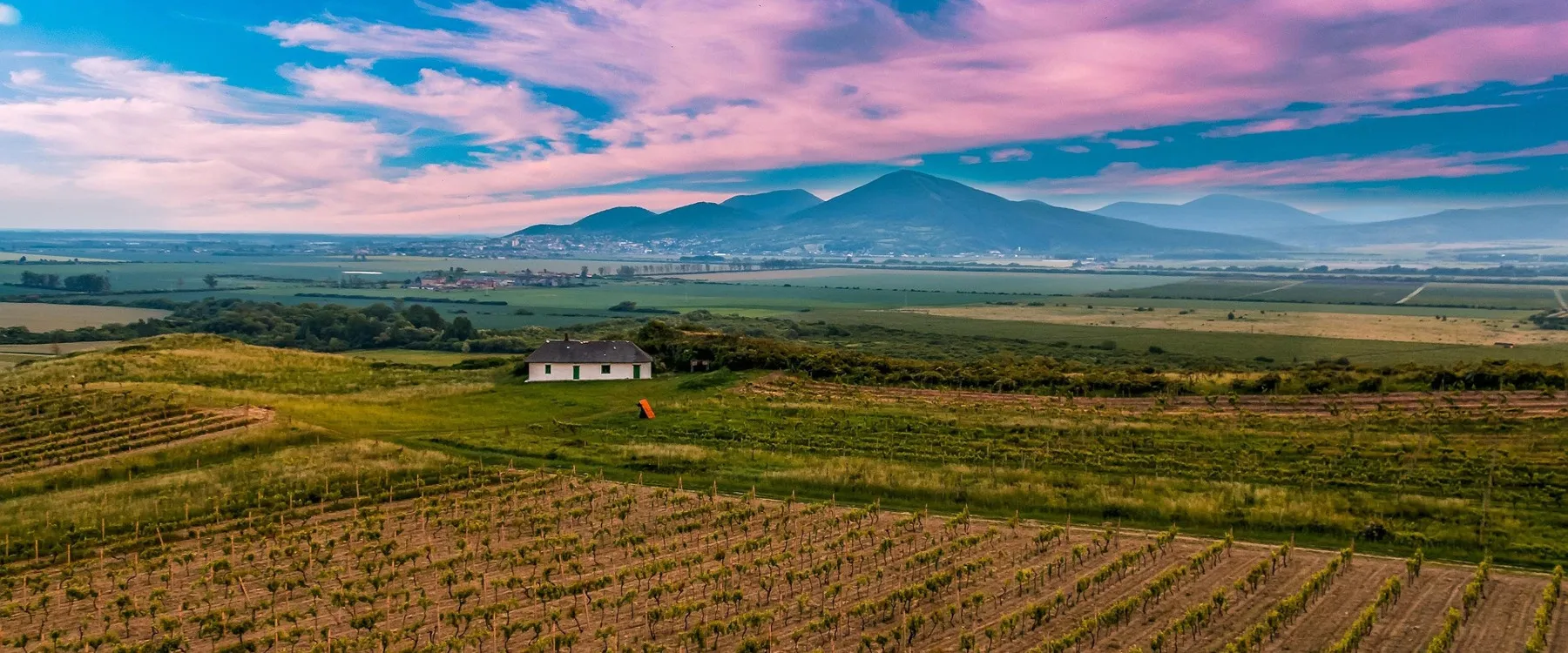
Tokaj itself encourages this double identity. Two rivers — the Bodrog and the Tisza — meet near the town of Tokaj, and that confluence helps create autumn mists that favour Botrytis cinerea, the “noble rot” behind the region’s great sweet wines. Yet UNESCO’s description of the landscape insists on something broader: vineyards, villages, small towns and deep cellar networks — a wine culture regulated for almost three centuries. The sweetness may be famous; the infrastructure is serious.
That seriousness shows up early in Tokaj’s legal memory. A royal decree in 1737 is widely cited as a foundational moment in delimiting who could use the name Tokaj — an early form of controlled origin. The region’s own historical narrative leans into classification and hierarchy: named vineyards, ranked sites, the sense that place can be argued about, not merely admired. It’s an amusing paradox: a district celebrated for dessert wines, yet culturally built on precision.
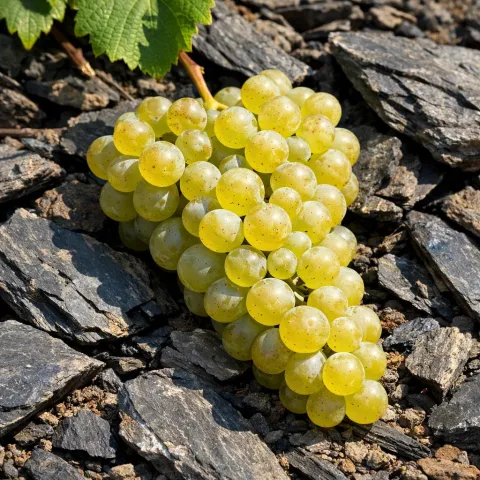
Furmint is the region’s main instrument of that precision. Tokaj permits only white grape varieties, and the authorised list includes Furmint, Hárslevelű, Sárga Muskotály, Zéta, Kövérszőlő and Kabar. Within that roster, Furmint dominates by planting (around 60%) and by personality: naturally high acidity, a thin skin that can invite botrytis, and a structural clarity that makes dry wines feel less like an “alternative” and more like a statement.
Soils do the rest. Tokaj’s vineyards are frequently described through volcanic materials — tuff, volcanic rock, mixed strata — and that language becomes more persuasive when the wine is dry, because sugar is no longer the loudest element in the room. It’s no coincidence that modern dry Tokaj found its confidence in single-vineyard bottlings. “Single vineyard wines are the way to go,” says Hajnalka Prácser of Erzsébet Winery, in a reconstruction of how dry Tokaj re-emerged after communism.
The post-1990s timeline is full of specific turning points. Disznókő is acquired by AXA Millésimes in 1992 — a fact the estate places at the heart of its own story. Oremus, Vega Sicilia’s Tokaj project, is founded in 1993 in Tolcsva, with a modern winery completed in 1999 and linked to older cellar systems. Royal Tokaji is created in 1990 by Hugh Johnson and Peter Vinding-Diers, a signal that Tokaj was ready to re-enter the international conversation with new energy.
If one scene has become emblematic for dry Tokaj’s modern credibility, it’s the year 2000. István Szepsy and Zoltán Demeter — working at Királyudvar in Mád — bottle a single-vineyard wine from Úrágya, initially intended as base wine for Aszú, but left over after an Aszú harvest that didn’t deliver as expected. The “leftover” becomes the message: dry Tokaj is not an aside, it is a category with ambition.
Ambition even reached the bottle. In 2012, Tokaj developed a dedicated shape for dry wines, modelled on the traditional Aszú bottle: darker glass, a recognisable silhouette, “TOKAJ” embossed on the neck. Branding, yes — but also a quiet declaration that dry Tokaj wants to be read instantly, without explanation.
And dry does not mean “modern only”. Tokaj’s dry Szamorodni — aged under a flor-like yeast layer, oxidative and savoury — is a reminder that the region always had an appetite for complexity beyond sweetness. Samuel Tinon, a French winemaker who settled in Tokaj and helped revive the style, frames it almost as a theology: “dry Szamorodni and sweet Aszú are like Alpha and Omega”. Not a battle of styles — more like a dialogue inside the same cellar.
Which brings us back underground. Tokaj’s cellars are carved into volcanic tuff, held at around 10–12°C with very high humidity; the walls often carry the dark “cellar mould”, Cladosporium (Zasmidium) cellare, feeding on alcohol vapours and contributing to the ageing environment. In that setting, dry Furmint gains dimension not by copying other regions, but by plugging into a centuries-old architecture designed for longevity.
Tokaj isn’t only Aszú. Dry Furmint reveals the region’s sharper profile: volcanic soils, river mists, and tuff cellars built for long ageing. From the post-1990 renaissance to Mád’s named vineyards, a taut, age-worthy white is reshaping Tokaj’s global identity.